
How Combat Works
How Combat Works (and why it took so many iterations)
Before I jump into the details, and backstory, with how I settled on the combat mechanics for Nocturne, I want to give you the heads up there are some game mechanics mentioned here that only appear later in the game, but there are no story spoilers.
That being said, if you don’t want to know about ANYTHING that will be featured later in the game, do not read this post.
If you’re okay with learning about some combat mechanics that appear in later chapters, then this blog is safe to read.
Starting from Scratch
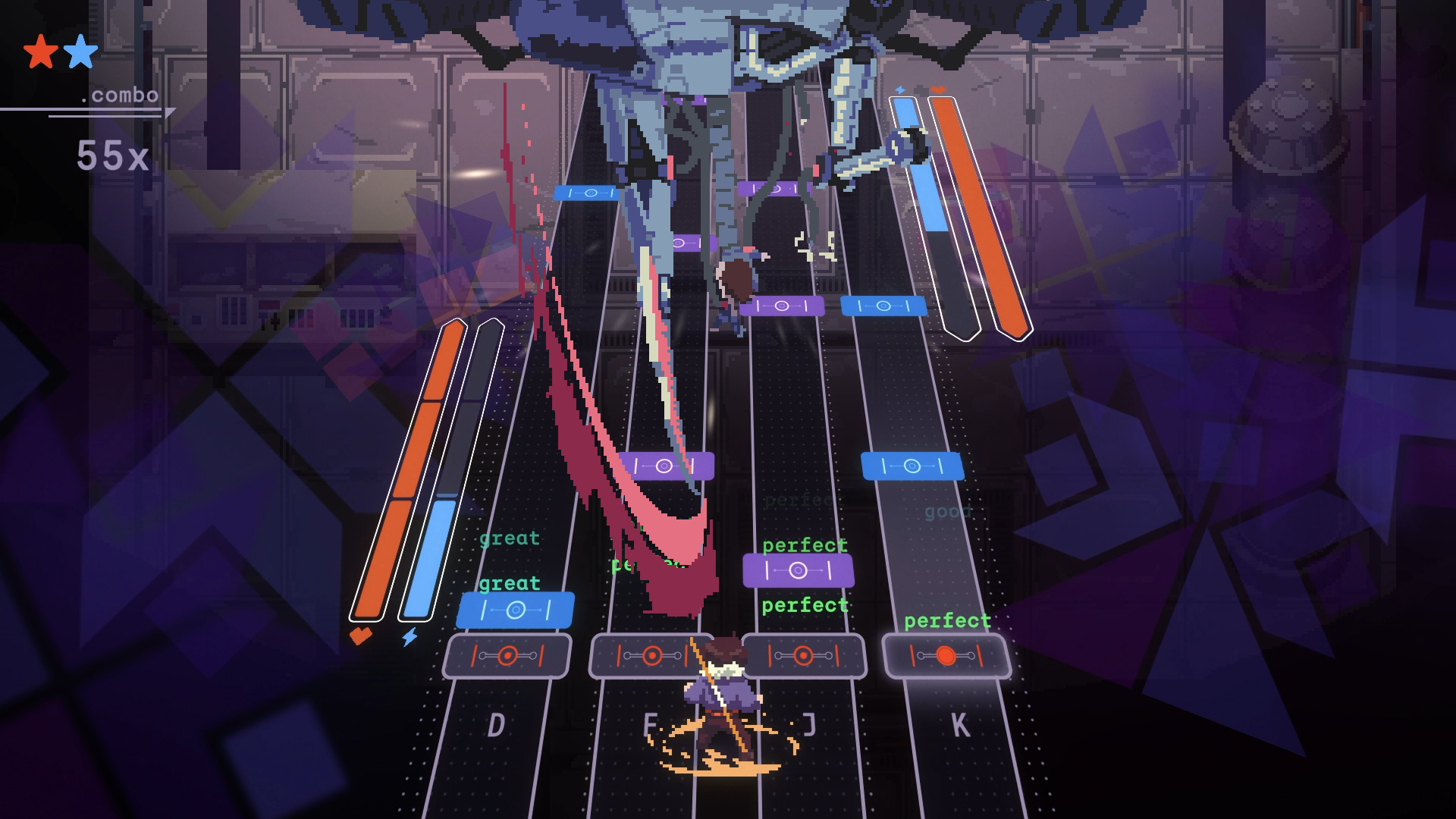
From the beginning, Nocturne was always meant to blend RPG and Rhythm, but I didn't want to compromise the core rhythm elements by distilling them down to musically timed attacks or quick time events. I needed something that felt both like a traditional RPG and a complete rhythm game.
So I started with pure rhythm first. I made playing cool songs the absolute forefront of the gameplay, DDR / Guitar Hero style. Then I focused on the RPG elements to make it feel like both sides of the gameplay were deeply connected.
In my previous demo, Nocturne: Prelude, I took this to the extreme. There was no attacking at all. No way to deal damage. Everything was automatic, passive items, passive effects. You just played the song and that was it.
And players told me something felt like it was missing. It felt disconnected. They wanted to feel like they were actually fighting. To me, what they were asking for was more player agency. More meaningful choices in combat besides just hitting notes.
Turning Rhythm into Combat
So the challenge became, how do you add attacking without it feeling like a completely separate system just slapped on top?
The answer I landed on is that attacking in Nocturne needs to feel timed, yet fully player controlled. You always have a choice when to attack, and that choice should always feel meaningful.
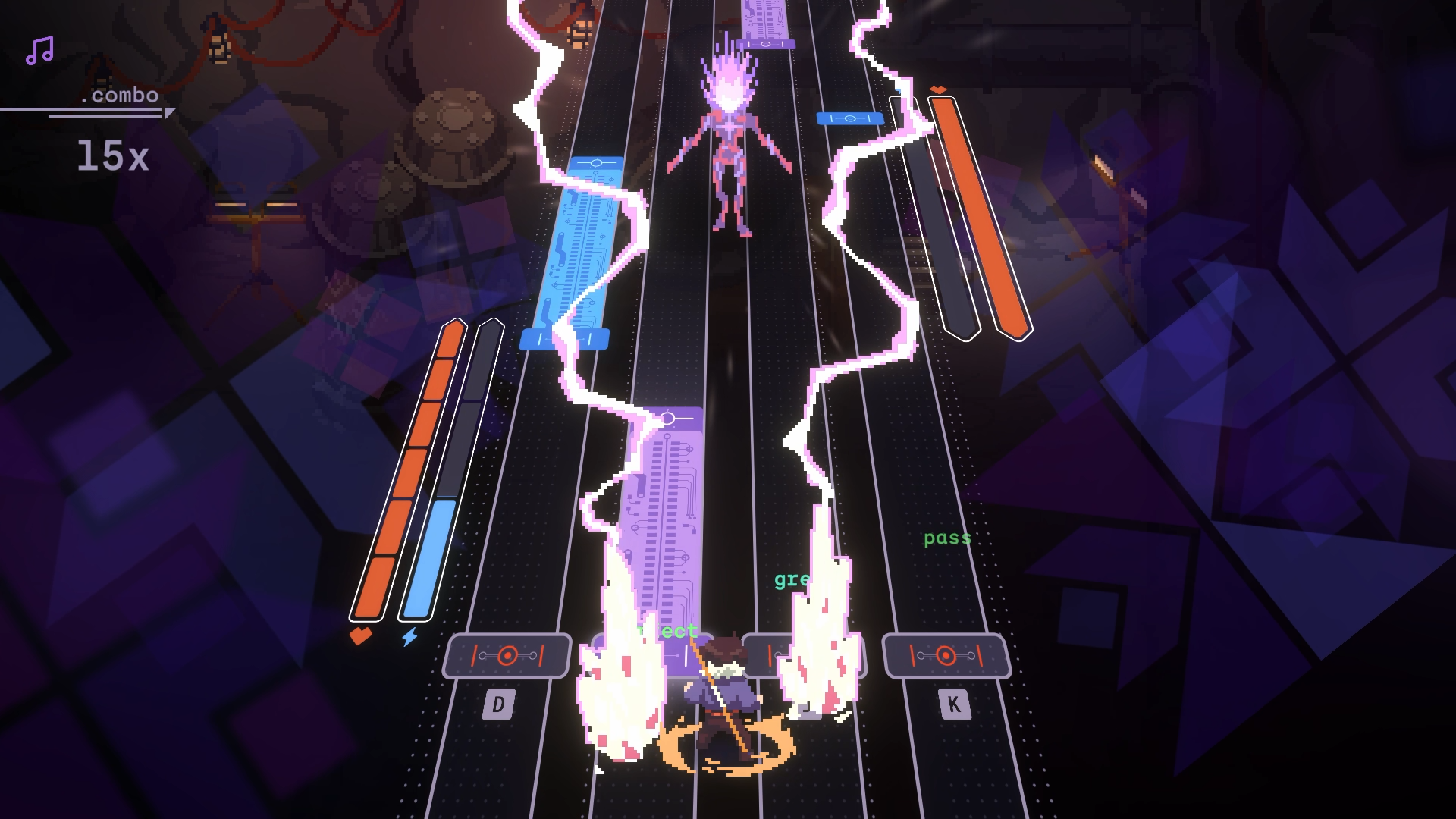
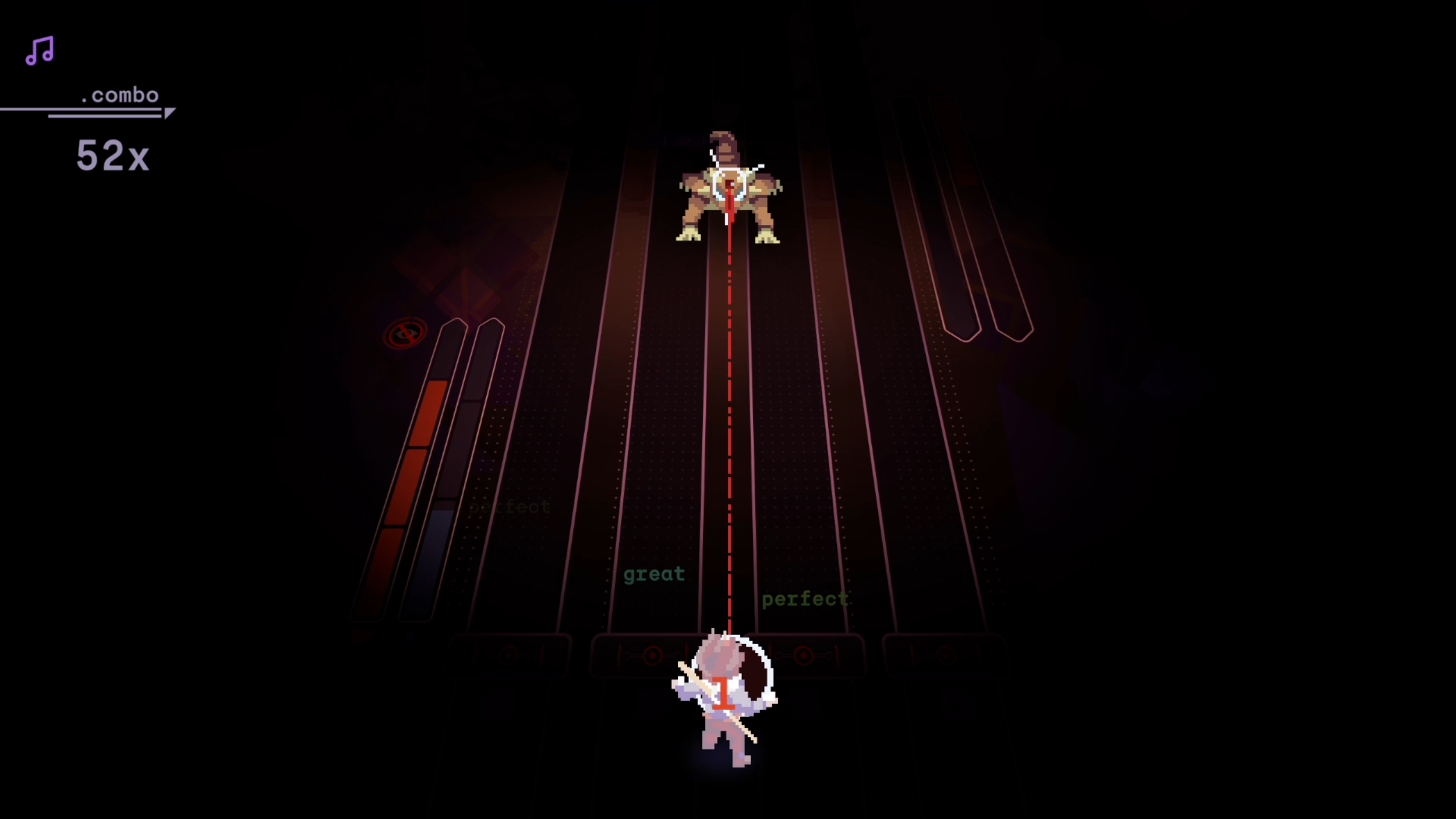
So here's the basics: if you miss a note, the enemy charges energy. That energy bar directly ties your performance in the rhythm game to the combat. If you play badly, the enemy attacks more, but the key piece of the attack is the windup phase.
When the enemy's energy bar fills completely, they enter a 0.75 second windup. The bar turns yellow, the columns light up, and sound effect fires. That's your window of opportunity. Attack during the windup and you land a critical hit for bonus damage. So while you can attack anytime, only this window will land a critical hit.
It makes timing your attacks more intentional and gives players more agency over their actions. You're not just mashing an attack button thoughtlessly throughout each encounter, at least not if you want to do well. That energy bar is almost like a fifth column you're watching, timing when to strike vs when to hold back.
Stagger: How Fights End (and why they don't just stop)
Here's a design problem that's pretty unique to rhythm RPGs: in a normal RPG, you kill the enemy when their HP hits zero. Pretty simple. But in a rhythm game, you want to play the whole song. Fights have a fixed duration, especially boss fights with story beats and cutscenes woven in. It would feel counter intuitive to end a song early if you're doing well in combat, especially if you're going for highscores.
So what happens when you reduce an enemy to zero health in combat?
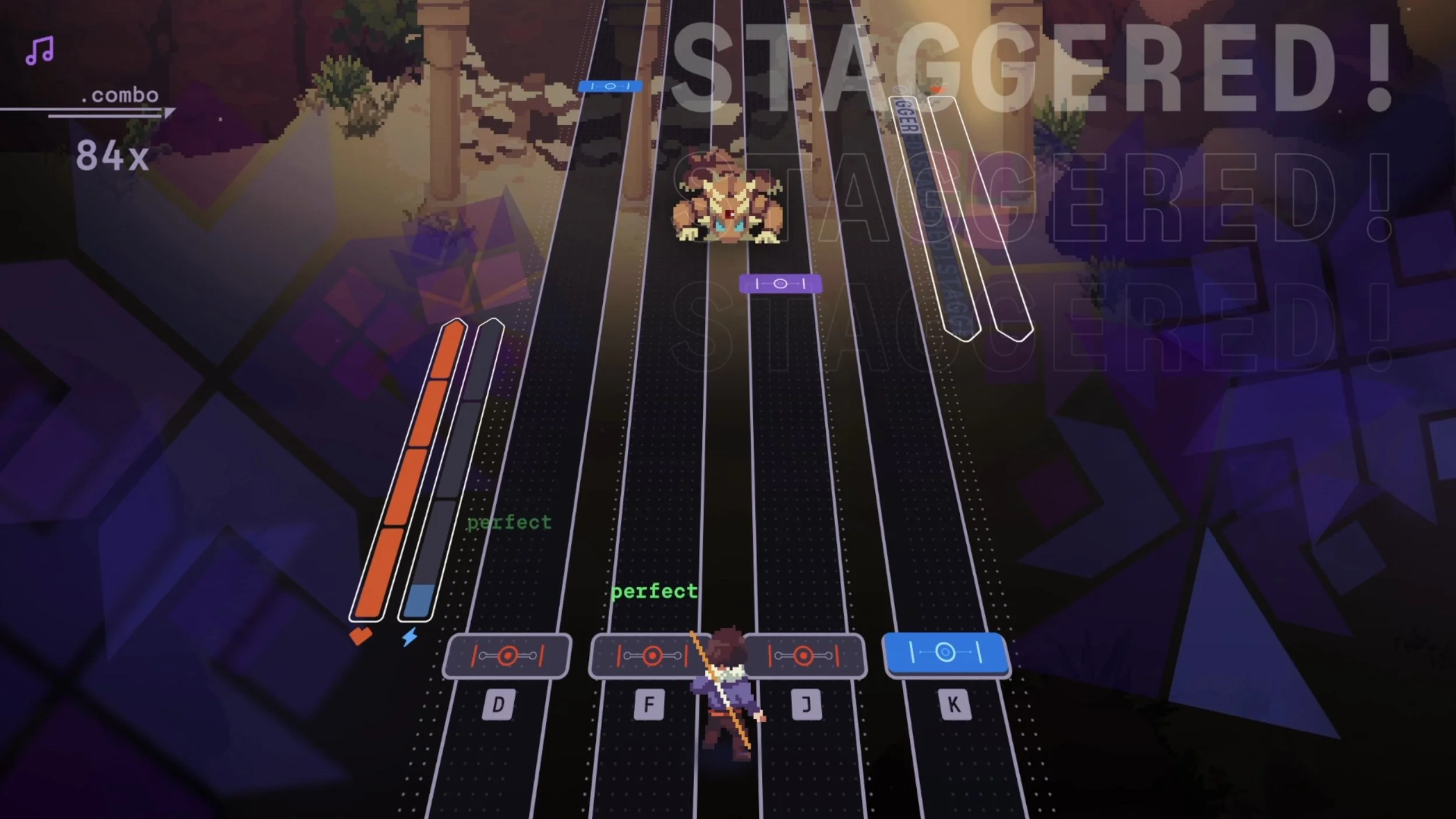
The answer is Stagger. A phase where the enemy can't charge energy or attack you. By default stagger lasts 10 seconds, giving you a breather to recover health and stabilize.
But here's where it gets interesting, if you attack the enemy while they're already staggered, you add additional time to the stagger. This creates a whole build path around maximizing stagger, equipping items that extend stagger duration, or speeding up your attacks so you can stagger them for longer.
Stagger also ties directly to your rewards. The total time you keep an enemy staggered gives you a multiplier on your Currency and XP at the end of the fight. Stagger longer, earn more. It gives you two strong reasons to push the stagger as far as possible, it keeps you safer during hard sections, and it makes the fight more rewarding.
This mechanic also helps the game scale as you progress. If you come back to fight an enemy from an earlier chapter, your stats will be so much higher that you can chain staggers for longer than before, giving that feeling of enjoying how much stronger you've become.
(Quick note: the updated Stagger system is a new feature that will be live from June 1st in the new playable demo of Nocturne)
Decide your own Fighting Style
As you progress through the game and collect items, you'll start to find that combat opens up into multiple distinct playstyles.
Karma lands a Riposte
Critical Hits: The default path. Attack during the windup phase for bonus damage. Clean, aggressive, high reward if you're playing well.
Energy Damage: A more defensive option. Equip items that cause your attacks to deal energy damage rather than (or in addition to) health. Keeping their energy drained means they attack you less often. This only works during the energy charging phase, so it's in direct conflict with going for Crits.
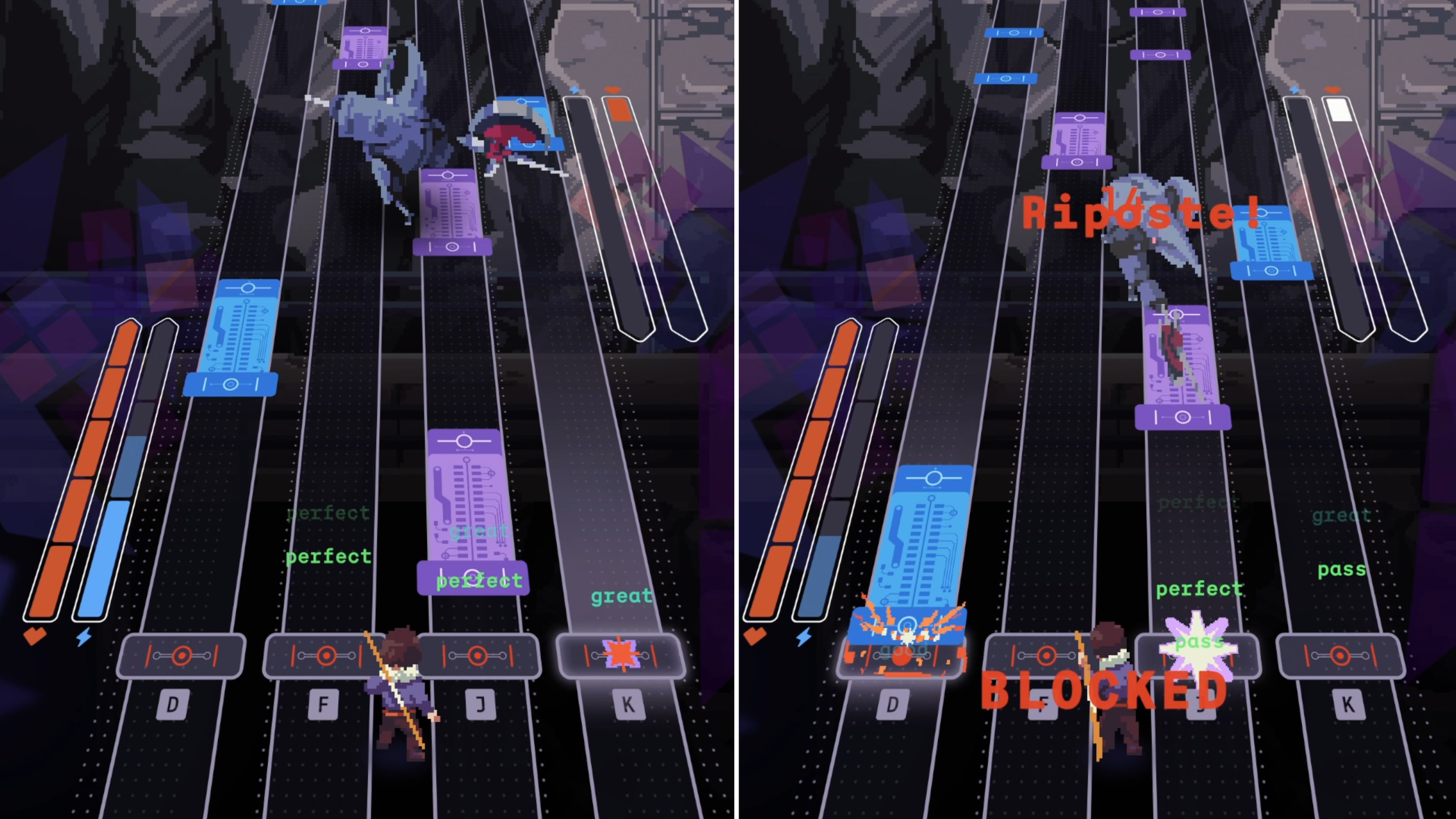
Riposte: Introduced in chapter 3, this is the hardest but most rewarding mechanic. After the windup completes and the enemy begins their attack animation, there's a 250ms window before the damage frame lands. Land your attack in that window and you completely block the incoming hit.
But don't forget, you can only Riposte if you have enough energy to attack. So if you're missing a lot of notes, the Riposte is often not an option. There's also no visual indicator or warning prompt. You have to learn the timing of each enemy's attack animation.
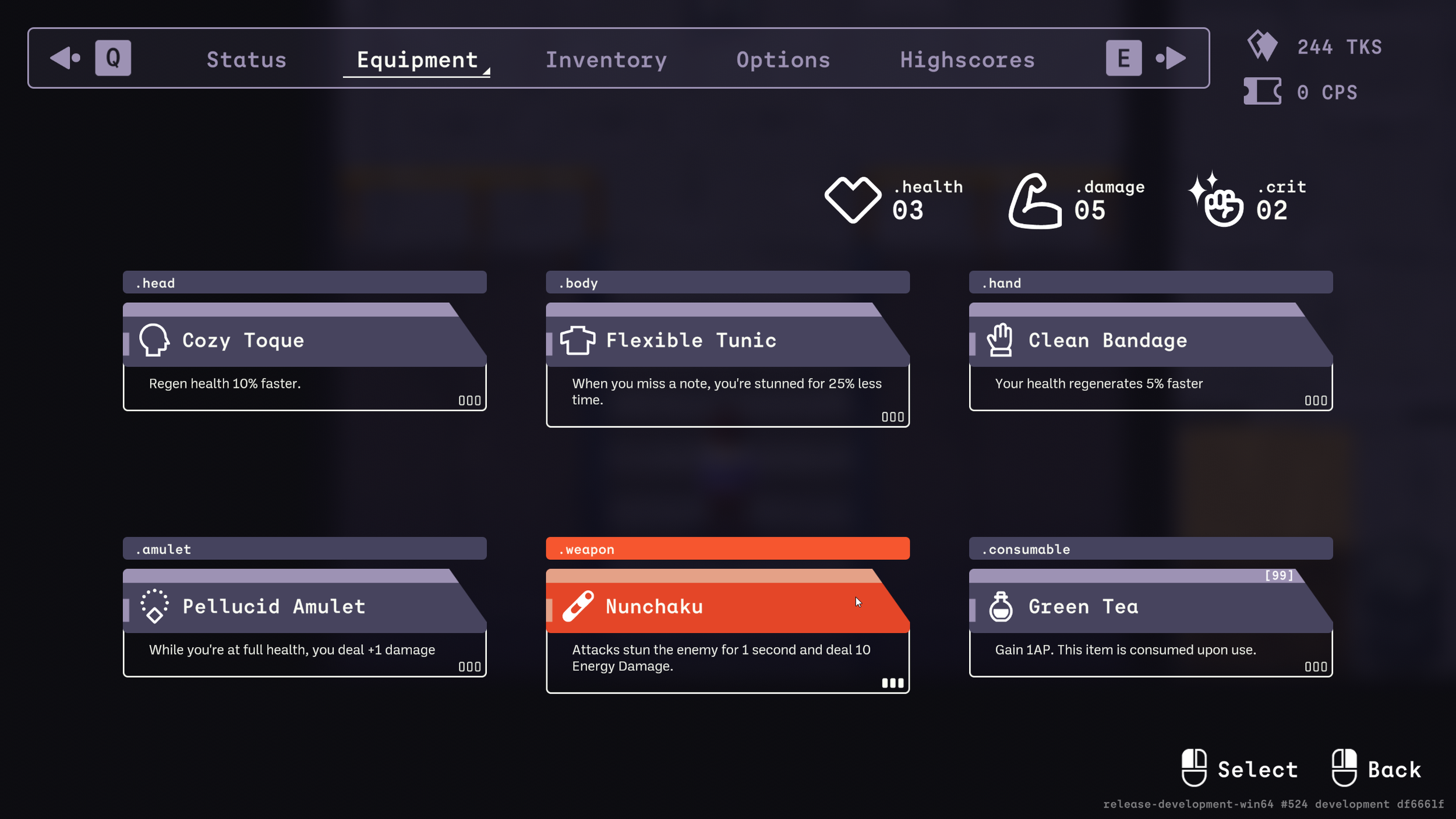
Each of these paths can be set up with your item builds, or you can create your own custom blend of various unique items that match your exact style. You could even switch your loadout between fights depending on the enemy.
Plus we've not even got to talking about consumables and items you’ll find in the game, but I’ll save that for another blog.
Note Types
Two new note types are coming in the full version of Nocturne that aren't in the current demo.
Mines: You should avoid hitting these notes. If you hit a mine, the enemy gets a large burst of energy, roughly three times more than a regular missed note. Items can help reduce or protect against mine effects.
Critical Notes: These are notes that trigger a unique effect specific to the enemy if you miss them. It might be a visual distortion that obscures your columns for a bit, a debuff on your character, a buff to the enemy, or something else entirely. Each enemy's critical note has its own flavour.
Balancing Difficulty Outside the Chart
One thing that's unique to Nocturne is that the chart itself isn't the only difficulty lever. In most rhythm games, hard chart = hard battle. In Nocturne, some enemies passively charge energy faster, or gain less energy when you miss a note, or have other combat mechanics and effects that affect the challenge of the battle..
This means I can fine tune difficulty on a per enemy basis, such as making punishing charts a little more forgiving, or boosting tougher enemies' aggression if a chart lands on the easier side.
And that's the combat system in Nocturne in a nutshell. It's taken a long time to get right, but I think where I've landed serves the original goal, fighting an enemy that not only feels like a satisfying rhythm game, but one that provides player agency in combat like a traditional RPG.
In my next blog, I’ll be taking a deeper look at items and consumables you can find in the game. As always, there will be no story spoilers, just some previews of what you can expect to find in the game and examples of how they work.