
The Arcade and Difficulty Options
If you've been following Nocturne's development for any length of time, you'll know that the music is a core part of the game. Every enemy encounter is a rhythm battle and by the time you're done with the story, you'll have worked your way through 101 original tracks (if you find and defeat every enemy that is).
But I get asked all the time how it’ll work if someone wants to go back to play a specific enemy again. Will you need to play through the story again? Will you need to load an older save?
Introducing: The Arcade.
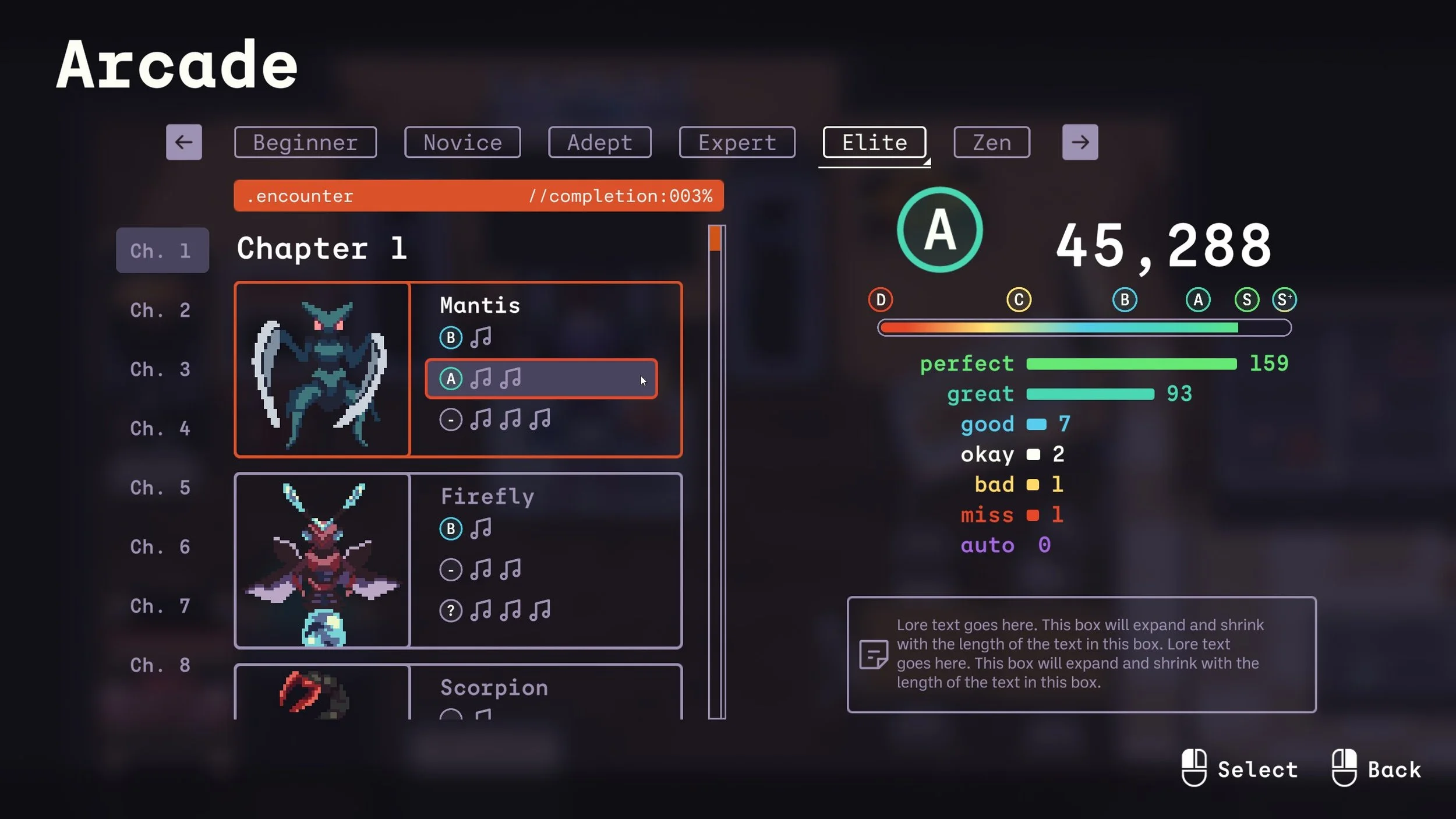
Play any track you’ve unlocked!
How it Works
First up, the Arcade isn't a menu option. It's a physical location you can visit in Nocturne's main city, (which you'll reach early in Chapter 2). You'll literally play tracks on an old school arcade machine.
Any enemy you've already defeated in the Overworld will have its track available for you to replay as many times as you like. Your highscore is saved for every track, so there's always a reason to go back and try to beat your own record.
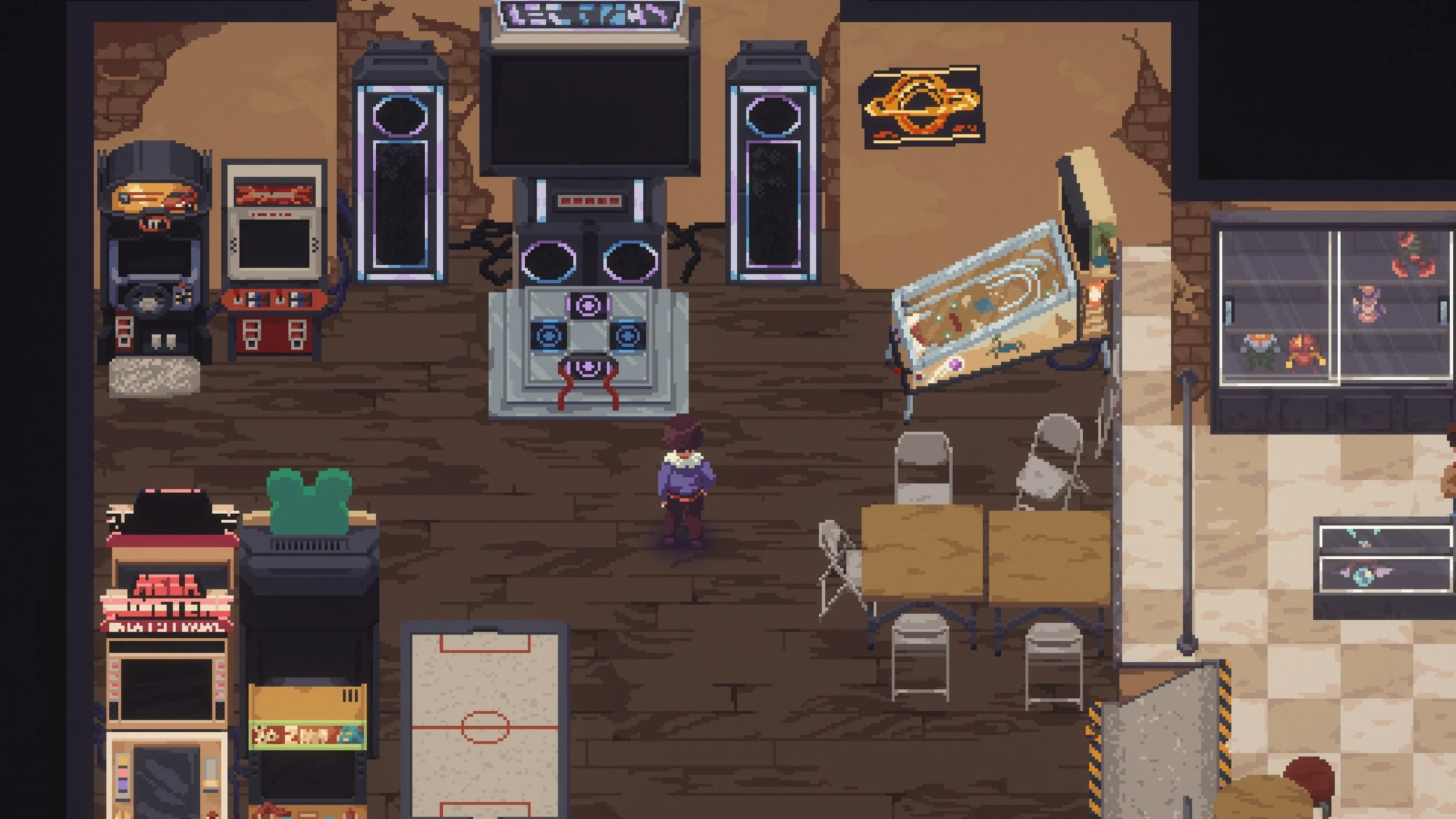
You’ll find the Arcade in the main city.
No content is gated by difficulty. The whole game is accessible to you no matter what difficulty you're playing on. Items, stats, and currency are consistent across all difficulties. I never want a player to feel like they chose the wrong setting, and you can always change the difficulty at any time in the menu, whether you’re playing through the story or in the Arcade. I built Nocturne to accommodate every skill level.
Every Enemy Has Three Melodies
This is a feature I don't think most players know is in the game, so I want to explain it here.
Every enemy in the game has three different versions of their track. Three Melodies, each with its own chart and slightly harder than the last (emphasis on slightly). When you first encounter an enemy, you always get Melody 1. That's the baseline. Here's how the others unlock:
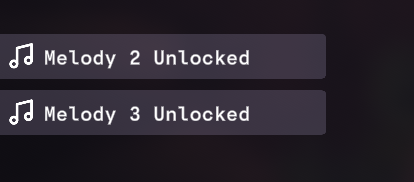
Earn a C rank or better and you'll unlock Melody 2. From that point, Overworld encounters with that enemy will randomly pull from either Melody 1 or 2, so even creatures you've seen before can surprise you.
Earn an A rank or better against an enemy, and Melody 3 unlocks. It's the hardest of the three, though difficulty step ups are noticeable rather than punishing. Each Melody is a different arrangement of the same creature's theme.
You don't need to grind Overworld encounters to unlock new Melodies either. The Arcade handles all of that. If you want to get your A rank on the Firefly, you can do it in the Arcade if you prefer, and it'll unlock everywhere else in the game too; nice and simple.
One thing worth noting, is that melody unlocks are tied to your current difficulty. Unlock Melody 2 on Elite, and it'll be available on every easier difficulty automatically, but you'll still need to earn it separately on Zen if you’re wanting to progress through the difficulties. I wanted players who are working their way up in difficulty to still feel that sense of progression.
Why Difficulty Is So Hard To Get Right
Nocturne has six difficulty settings to choose from. I always talk about wanting the game to work for someone who's never touched a rhythm game before, and someone who's played one for a thousand hours, and I mean that, but actually building that was one of the hardest things about making this game.
Here's the problem: Nocturne's combat is entirely skill-based. An experienced rhythm player can, in theory, hit every note in the game first try. That's just the nature of the genre. In Dark Souls though, raw skill from another game won't carry you through without taking any damage. In Nocturne, it might.
Early in development I had a simple rule: miss a note, take a point of damage. Seemed reasonable, but a Beginner chart might have 50 notes in a track, while a Zen chart of the same track might have 500. There wasn't any single health value that worked across both ends of the difficulty spectrum. If I gave the player 100 health to make Zen manageable, then Beginner becomes literally impossible to lose. The numbers just don't hold together when the note counts are that far apart.
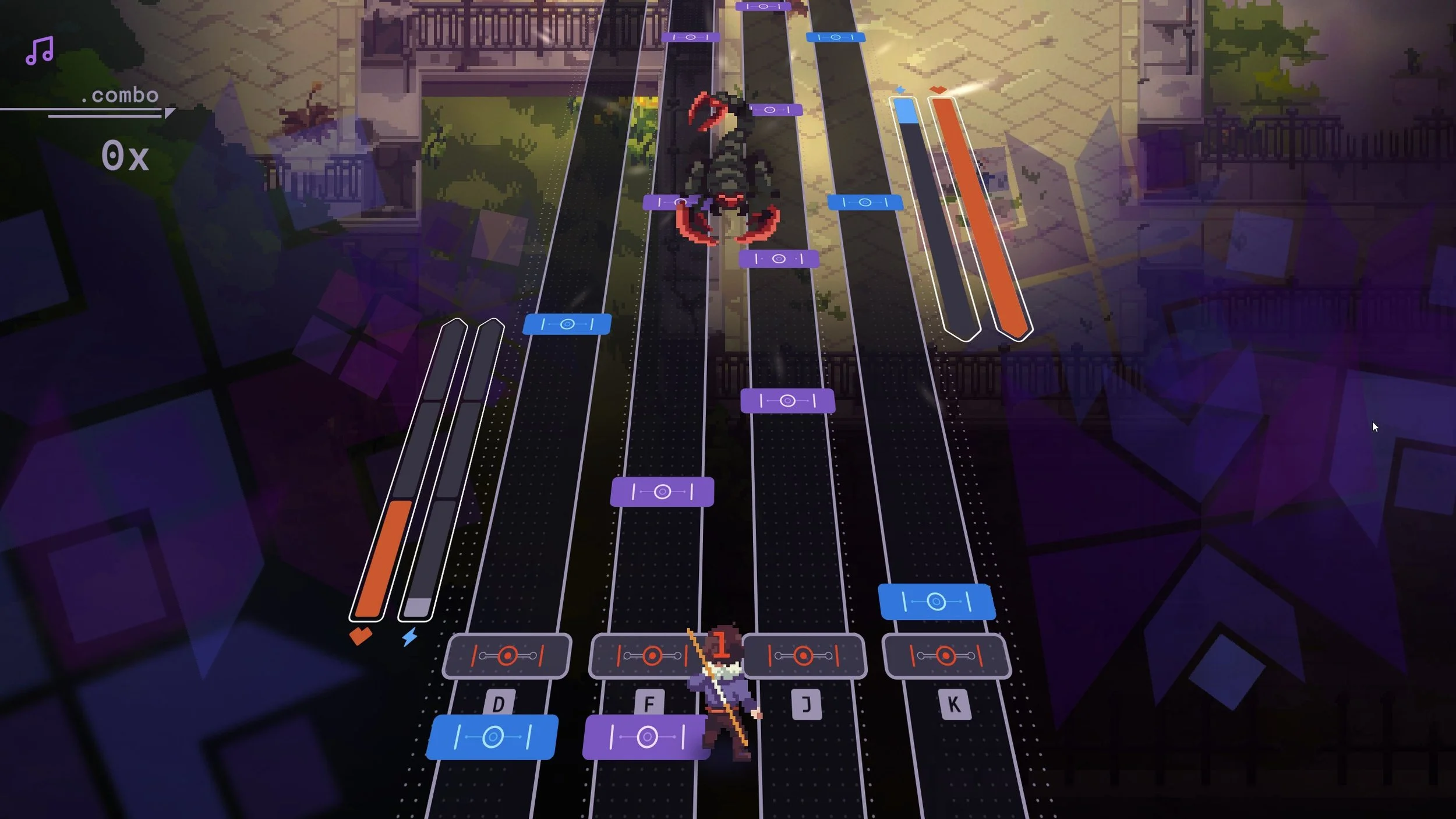
Scorpion on Zen (our highest difficulty)
The solution was the Energy system. Instead of missing notes dealing direct damage, missed notes charge the enemy's attack bar instead. Once it's full, they windup and launch an attack. But here's the important part most players don’t realise, while the enemy is doing their attack animation, they're not charging any energy. Missed notes during that window carry no penalty at all!
What this means in practice is that there's a natural ceiling on how punishing any single section of track can be. If you hit a dense section on Zen and start missing lots of notes, as the enemy is attacking you're getting some breathing room to make mistakes before recovering. And this is what made it possible to appropriately scale the combat across all difficulties. It was no longer about the total number of notes you missed, it was about recovering well after a series of mistakes.
Autoplay Feature
Nocturne will also feature an Autoplay option in the Accessibility settings. You can enable Autoplay per column. So if you only want to play with two columns, whether that's because of a physical limitation or just personal preference, the other two will play all the notes automatically. Or you can turn Autoplay on for every column and just experience the story and music without any mechanical demands.
The only trade-off is that Autoplayed notes have a reduced score count, which means some melody unlocks are out of reach if you're fully Autoplay. I think this is a fair trade-off because it still allows for the reward of unlocking melodies, and a fair competition for highscores, without preventing anyone from progressing through the game.
Corruption Minigame Difficulty
If you’ve played the Nocturne Demo, you might remember corrupted objects in the Overworld that trigger rhythm minigames. These rhythm puzzles are where the columns move, rotate, disappear, and challenge you beyond the regular boundaries of combat. You’ll need to hit enough notes to remove the corruption and progress through the game.
These scale differently from normal combat. Every player plays the exact same chart regardless of difficulty, but what changes is your miss tolerance. On the easiest setting, you can miss six notes (there's usually around twenty notes) and still pass. On the hardest difficulty, you get one miss. There's a lot less margin for error.
What's Next
Next time I'll be doing a deep dive on Nocturne's combat mechanics, which is why I avoided touching on that in this post. I’ll talk about things like different note types you’ll find during the game, a little preview of some new enemy attacks, and how the health and energy bars work. So if you want to know more details about Nocturne's rhythm combat, that'll be the post for you.